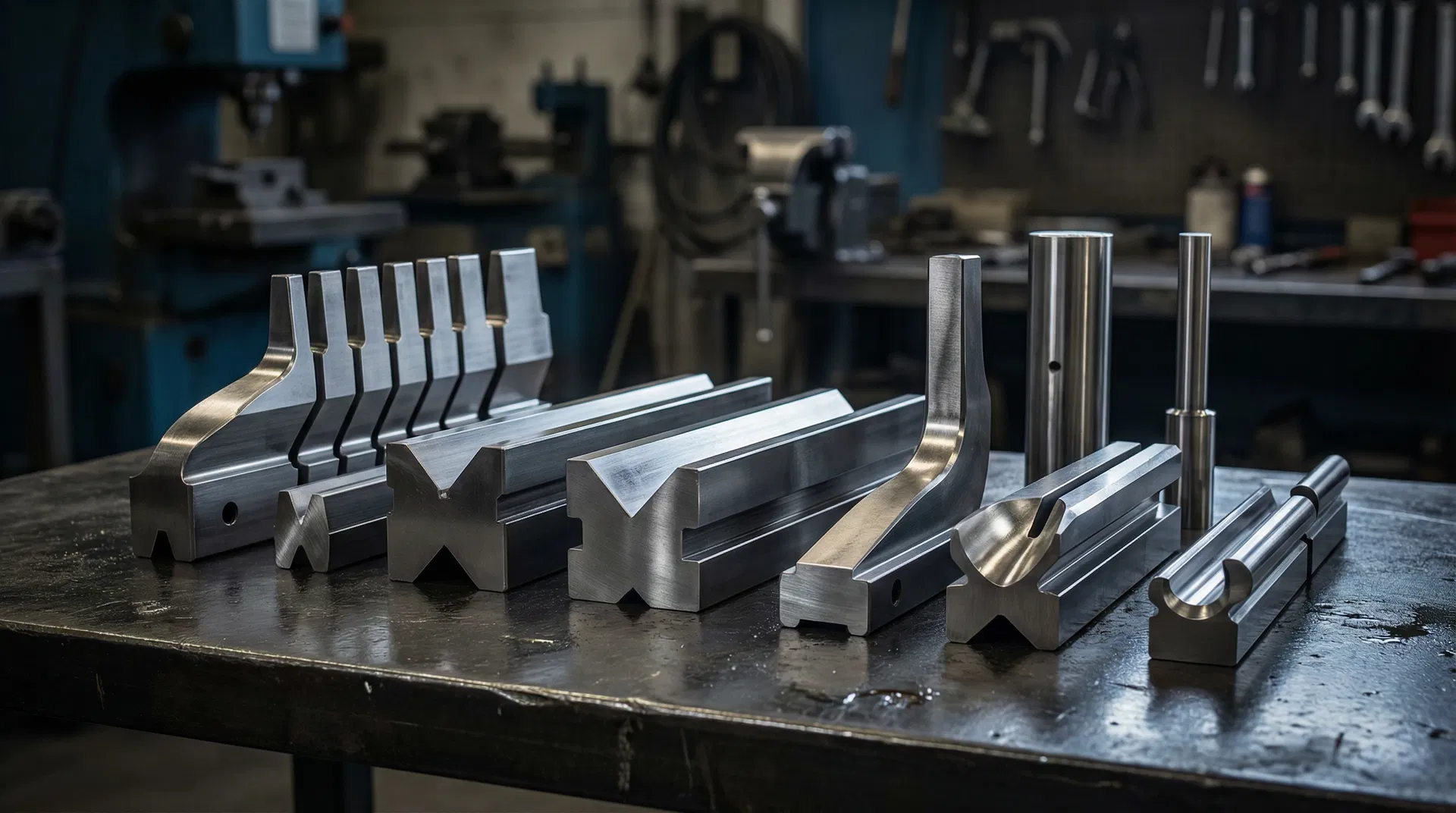
Press Brake Tooling: Manufacturer vs Distributor
Comparing the advantages of buying directly from manufacturers versus distributors. Lead times, pricing, technical support, and customization options.
Press Brake Tooling: Manufacturer vs Distributor
Sourcing press brake tooling requires choosing between purchasing directly from manufacturers or through distributors. Each channel offers distinct advantages and trade-offs in pricing, lead times, technical support, and customization capabilities. Understanding these differences enables informed procurement decisions aligned with your operational requirements and constraints.
Direct Manufacturer Sourcing
Advantages
Pricing Structure Manufacturers eliminate distributor margins, typically offering 15-30% lower pricing for standard tooling and 20-40% savings on custom tooling. For operations with significant annual tooling expenditure (>$20,000), these savings justify the additional effort of direct sourcing.
Example pricing comparison for standard V-die set (punch + die, 835mm length):
- Manufacturer direct: $1,200-1,500
- Distributor: $1,600-2,100
- Savings: $400-600 per set (25-30%)
Customization Capabilities Manufacturers have engineering resources and production capabilities to design and produce custom tooling for specialized applications. Custom tooling through distributors often involves the distributor acting as intermediary to a manufacturer, adding cost and communication complexity.
Custom tooling scenarios requiring manufacturer engagement:
- Non-standard profiles or geometries
- Special materials or heat treatment
- Integrated features (locating pins, sensors, quick-change systems)
- Tooling for proprietary bending processes
Technical Expertise Manufacturer engineering teams understand tooling design, materials, and manufacturing processes at a fundamental level. This expertise enables:
- Optimization recommendations for challenging applications
- Troubleshooting of tool performance issues
- Design consultation for new product development
- Material and treatment selection guidance
Quality Control Direct manufacturer relationships provide visibility into quality processes and enable specification of inspection requirements. For critical applications, manufacturers can provide:
- Material certifications
- Dimensional inspection reports
- Hardness testing documentation
- Surface finish measurements
Disadvantages
Lead Times Standard tooling from manufacturers typically requires 3-6 weeks lead time vs. 1-3 days from distributors with inventory. Custom tooling may require 8-12 weeks. These extended lead times require advance planning and inventory management.
For operations requiring rapid tooling replacement or frequent tool changes, manufacturer lead times may disrupt production. Maintaining safety stock or backup tooling becomes necessary.
Minimum Order Requirements Many manufacturers impose minimum order values ($500-2,000) or quantities to justify direct sales. Small orders or single tool purchases may not meet minimums, forcing distributor sourcing or paying premium pricing for small quantities.
Logistics Complexity International manufacturer sourcing involves:
- Import duties and customs clearance
- International shipping costs and delays
- Currency exchange rate risk
- Communication across time zones
- Different business practices and expectations
These factors add complexity and risk compared to domestic distributor sourcing.
Limited Product Range Individual manufacturers specialize in specific tooling types or standards. Sourcing a complete tooling set may require engaging multiple manufacturers, each with separate ordering processes, lead times, and payment terms.
Distributors aggregate products from multiple manufacturers, enabling one-stop sourcing for diverse tooling requirements.
Distributor Sourcing
Advantages
Inventory Availability Distributors maintain inventory of common tooling configurations, enabling same-day or next-day delivery. This rapid availability is critical for:
- Emergency tool replacement
- Unexpected production requirements
- Prototype and development work
- Job shop operations with unpredictable needs
Simplified Logistics Distributors handle:
- Inventory management and warehousing
- Order consolidation from multiple manufacturers
- Domestic shipping and delivery
- Returns and warranty administration
This simplification reduces administrative burden, particularly for smaller operations without dedicated purchasing departments.
Flexible Ordering Distributors accommodate:
- Small quantity orders (single tools)
- Mixed orders (different manufacturers, standards, types)
- Credit terms and payment flexibility
- Emergency orders outside normal business hours
Local Support Regional distributors provide:
- On-site technical support and troubleshooting
- Tool inspection and measurement services
- Training on tool selection and use
- Warranty support and returns handling
This local presence is valuable for operations without in-house tooling expertise.
Product Range Distributors offer comprehensive product lines including:
- Tooling from multiple manufacturers
- Accessories and consumables
- Measurement and inspection equipment
- Safety equipment and supplies
One distributor relationship can satisfy diverse procurement needs.
Disadvantages
Higher Pricing Distributor margins typically add 25-40% to manufacturer pricing. For high-volume operations, this premium represents significant cost over time.
Annual tooling expenditure comparison:
- $50,000 annual spend
- Distributor premium: 30%
- Additional cost: $15,000/year
- Five-year cost impact: $75,000
Limited Customization Distributors primarily stock and sell standard tooling. Custom tooling requests are forwarded to manufacturers, with the distributor acting as intermediary. This adds:
- Communication delays and potential misunderstandings
- Additional markup (10-20% on top of manufacturer custom pricing)
- Extended lead times
- Limited technical input from distributor
Technical Depth Distributor technical representatives have broad product knowledge but may lack deep expertise in tooling design, materials, or manufacturing processes. Complex technical questions often require escalation to manufacturer engineering teams.
Inventory Limitations Distributors stock common configurations but may not inventory:
- Specialized tooling for specific machines or applications
- Premium materials or treatments
- Long tools (>2000mm)
- Low-demand items
These items require special ordering, negating the inventory availability advantage.
Decision Framework
When to Source Direct from Manufacturers
High-Volume Operations Annual tooling expenditure >$20,000 justifies the effort of direct manufacturer relationships. The 20-30% cost savings ($4,000-6,000 annually) funds the additional procurement and inventory management effort.
Custom Tooling Requirements Applications requiring non-standard tooling benefit from direct manufacturer engagement. The engineering collaboration and cost savings (20-40% vs. distributor custom pricing) are significant for custom tooling projects.
Predictable Requirements Operations with stable, predictable tooling needs can plan orders to accommodate manufacturer lead times. Advance ordering and inventory management mitigate lead time disadvantages.
Technical Complexity Challenging applications (high-strength materials, tight tolerances, specialized processes) benefit from manufacturer engineering expertise. Direct access to engineering resources accelerates problem-solving.
Strategic Partnerships Long-term, high-volume relationships with manufacturers enable:
- Volume pricing discounts (additional 10-20% beyond standard direct pricing)
- Priority production scheduling
- Dedicated technical support
- Joint development of specialized tooling
When to Source Through Distributors
Low-Volume Operations Annual tooling expenditure <$10,000 makes distributor convenience and flexibility more valuable than direct pricing savings. The administrative effort of manufacturer relationships isn't justified by modest savings.
Unpredictable Requirements Job shops and contract manufacturers with highly variable tooling needs benefit from distributor inventory and flexibility. The ability to source diverse tooling rapidly outweighs pricing premiums.
Limited Technical Resources Operations without in-house tooling expertise rely on distributor technical support for tool selection, troubleshooting, and application guidance.
Emergency Situations Unexpected tool failures or rush orders require immediate availability. Distributor inventory enables rapid response that manufacturer lead times cannot match.
Diverse Product Needs Operations requiring tooling from multiple manufacturers, plus accessories and consumables, benefit from distributor one-stop sourcing.
Hybrid Approach
Many operations optimize sourcing through a hybrid strategy:
Strategic Items from Manufacturers
- High-volume standard tooling (planned orders, predictable requirements)
- Custom tooling projects
- Premium tooling with specialized treatments
- Long-term contracts for dedicated production tooling
Tactical Items from Distributors
- Emergency replacements
- Low-volume specialty items
- Prototype and development tooling
- Accessories and consumables
- Backup inventory for critical tools
This approach captures manufacturer cost advantages for planned, high-value purchases while maintaining distributor flexibility for unpredictable needs.
Evaluation Criteria
Pricing Analysis
Calculate total cost including:
- Unit price
- Shipping and handling
- Import duties (international manufacturers)
- Inventory carrying costs
- Administrative costs (purchasing time, payment processing)
Compare total cost, not just unit price, to make accurate sourcing decisions.
Lead Time Requirements
Assess your tolerance for lead time:
- Can production accommodate 4-6 week lead times?
- Is safety stock feasible for critical tools?
- How frequently do unexpected tool requirements arise?
- What is the cost of production delays due to tool unavailability?
Operations with low lead time tolerance favor distributor sourcing despite higher pricing.
Technical Support Needs
Evaluate your internal capabilities:
- Do you have in-house tooling expertise?
- How frequently do you encounter challenging applications?
- Do you require on-site support and training?
- Is remote technical support (phone, email) sufficient?
Limited internal expertise favors distributor relationships with local technical support.
Customization Frequency
Assess custom tooling requirements:
- What percentage of tooling is custom vs. standard?
- How critical is custom tooling to your operations?
- Do you have engineering resources to collaborate on custom designs?
- What is the annual value of custom tooling purchases?
Frequent custom tooling requirements favor direct manufacturer relationships.
Relationship Management
Manufacturer Relationships
Communication Establish clear communication channels with manufacturer sales and engineering teams. Understand response times and escalation procedures for technical questions.
Ordering Process Learn manufacturer ordering systems, payment terms, and shipping procedures. Standardize internal processes to reduce administrative burden.
Quality Issues Understand warranty policies and procedures for defective tooling. Establish inspection procedures for incoming tooling to identify issues promptly.
Long-Term Partnership Invest in relationship development:
- Regular communication beyond immediate orders
- Feedback on tool performance
- Participation in new product development
- Volume commitments for preferential pricing
Distributor Relationships
Account Management Establish relationship with dedicated account representative. This person becomes your primary contact for orders, technical questions, and issue resolution.
Inventory Planning Communicate anticipated requirements to enable distributor inventory planning. Distributors may stock items specifically for high-volume customers.
Technical Support Utilize distributor technical representatives for tool selection and troubleshooting. Provide feedback on support quality to enable continuous improvement.
Payment Terms Negotiate payment terms appropriate for your purchasing volume. Larger customers may qualify for net-30 or net-60 terms vs. prepayment for small orders.
Conclusion
Manufacturer and distributor sourcing each offer distinct advantages. Direct manufacturer sourcing provides cost savings and customization capabilities but requires longer lead times and more complex logistics. Distributor sourcing offers convenience, rapid availability, and local support at a pricing premium.
Most operations benefit from a hybrid approach: strategic sourcing of high-volume items from manufacturers combined with distributor relationships for tactical needs and emergency situations.
Evaluate sourcing decisions based on total cost (including lead time impact and administrative effort), not just unit price. The lowest unit price rarely produces the lowest total cost when all factors are considered.
Related Resources
- Contact Us - Discuss your tooling requirements with our team
- Product Catalog - Browse our complete tooling range
- Technical Support - Access our engineering expertise
Related Articles